ไม้พะยูงอินเดีย

The wood has also been used by traditional instrument makers for specific components where dimensional stability and strength are important. In Thai craftsmanship, its use extends to instruments such as the Thai pi, where it is among the woods selected for making the instrument body, and to the body of the klong khaek, a traditional Thai double-headed drum. These applications demonstrate how Dalbergia cultrata has become part of the material heritage of Thai musical instrument making.
Today, Dalbergia cultrata offers a compelling connection between nature, craftsmanship, and Southeast Asian musical heritage. Its deep coloration, distinctive character, and working properties give each piece its own identity. For the modern luthier, it is more than simply a dense hardwood—it is a material carrying a story of traditional craftsmanship, cultural heritage, and the enduring relationship between wood and music.
Siamese Blackwood — Dalbergia cultrata , also known as Siamese or Burmese Rosewood
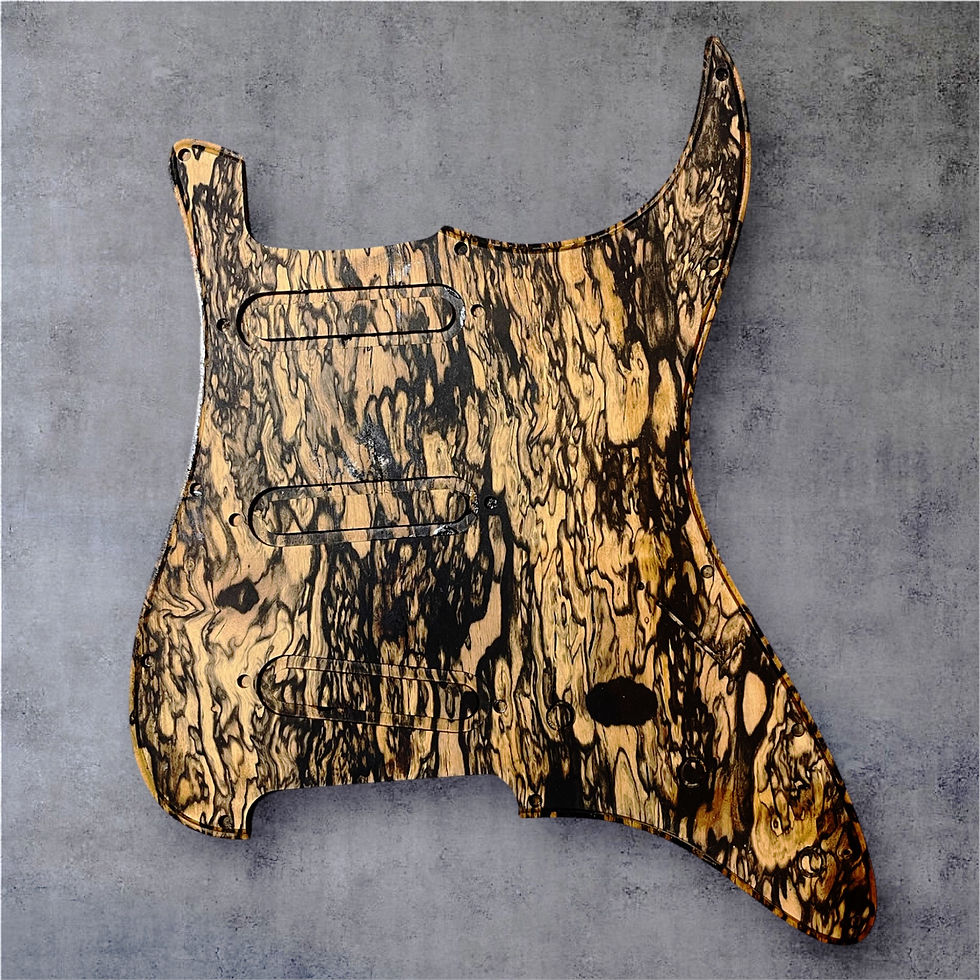
Thai name : Krabi Khao Khwai, is a dense hardwood native to Southeast Asia and a species of the Dalbergia genus. Its heartwood ranges from deep brown and purplish-brown to almost black, often revealing subtle natural variation and distinctive grain patterns. Fine-textured, hard, dense, and durable, it can be polished to a beautiful, deep luster, making it highly valued for fine woodworking and musical instruments.
What makes Dalbergia cultrata particularly fascinating is its long-standing association with Thai musical craftsmanship. In Thailand, the wood has been documented in the making of a wide range of traditional musical instruments and their components, including bowed instruments, drums, thon, jakhe, flutes, ranat rails and bars, krab, khong wong, and parts of the khaen. This diversity reflects not only the wood’s aesthetic appeal, but also its physical qualities—hardness, density, strength, and durability—which make it suitable for demanding musical applications.